Neither is better for every buyer. Stamp duty and loan limits work the same way for both, so the real difference is timing and what you can see before you commit. A new launch spreads your payments over construction and lets you choose from the whole project, but you buy from a showflat and plans, and you wait years before you can move in or rent it out. A resale condo is paid for in full when the sale completes, but you can inspect the actual unit and the building first, and live in it or let it soon after.
Which suits you depends on your cash flow, how soon you need the home, and how much uncertainty you're comfortable with. This guide sets the two routes side by side, using URA, IRAS and MAS rules checked on 31 October 2026.
The short answer
You might lean towards a new launch if:
- you'd rather pay in stages as the building goes up than all at once
- you don't need to move in or collect rent for a few years
- you want to choose your stack, floor and layout from the whole project
You might lean towards a resale condo if:
- you need somewhere to live, or rent to come in, soon
- you want to see the real unit, the view and the way the estate is run before you pay
- you'd rather not carry construction risk
New launch vs resale condo at a glance
| Factor | New launch | Resale condo |
|---|---|---|
| How you pay | In stages as construction is certified | Deposit at option, balance at completion |
| When most of the loan goes out | Stage by stage over the build | All at completion |
| Stamp duty (BSD, ABSD) | Same IRAS tables | Same IRAS tables |
| Seller's stamp duty clock starts | When you buy, not at TOP | When you buy |
| When you can move in | After TOP | After completion |
| When rent can start | After vacant possession (post-TOP) | After completion |
| Unit choice | The whole project, from the developer | Whatever is listed |
| What you inspect | Showflat, plans, specifications | The actual unit and building |
| Main risk | Construction delay, defects | Age, condition, renovation |
How you pay
New launch: progressive payment
Buying from a licensed developer follows standard forms that URA's Controller of Housing prescribes, the option to purchase and the sale and purchase agreement. The steps, from URA's Home Buyers' Guide:
- Booking fee. You pay between 5% and 10% of the purchase price and receive an option to purchase.
- The agreement. The developer must deliver the sale and purchase agreement to you or your lawyer within 14 days of the option date.
- Exercising the option. Within 3 weeks of receiving the agreement, you sign it and pay the balance down payment: 20% of the price less the booking fee. The developer may allow you up to 8 weeks from the option date to pay it.
- Instalments by stage. The rest of the price is paid as each stage of construction is completed and certified by the developer's qualified person, an architect or engineer. An instalment of 25% of the price falls due when TOP is issued and the roads, drainage and sewerage serving the project are done.
Two things to know. If you don't exercise the option in time, the developer may keep 25% of the booking fee. And if an instalment stays unpaid more than 14 days after it is due, the developer can treat the agreement as repudiated, annul it and forfeit 20% of the price. A later guide in this series will go through how the progressive payment schedule works stage by stage.
Resale: everything at completion
With a resale condo you buy from an owner on a private contract, usually through an option to purchase and then completion. There is no construction schedule, so the balance of the price, and your whole loan, goes out at completion. The exact deposit and timing are set in your contract, so read them with your lawyer.
Stamp duty: the same rules for both
Whether you buy new or resale doesn't change your Buyer's Stamp Duty (BSD) or Additional Buyer's Stamp Duty (ABSD). IRAS uses one set of tables, based on who is buying and the purchase price or market value, whichever is higher.
| BSD on residential property (from 15 Feb 2023) | Rate |
|---|---|
| First $180,000 | 1% |
| Next $180,000 | 2% |
| Next $640,000 | 3% |
| Next $500,000 | 4% |
| Next $1,500,000 | 5% |
| Remaining amount | 6% |
| ABSD (from 27 Apr 2023) | 1st home | 2nd home | 3rd and later |
|---|---|---|---|
| Singapore Citizen | 0% | 20% | 30% |
| Permanent Resident | 5% | 30% | 35% |
| Foreigner | 60% | 60% | 60% |
Both are due within 14 days of the signed contract, or 30 days if it is signed overseas. For a new launch that is the sale and purchase agreement. Our coming guide to BSD and ABSD covers the calculation in full.
Seller's stamp duty and the 4-year clock
Seller's stamp duty (SSD) is what you pay if you sell within a set period of buying. For homes bought on or after 4 July 2025, IRAS sets it as:
| Sold within | SSD |
|---|---|
| 1 year | 16% |
| More than 1 to 2 years | 12% |
| More than 2 to 3 years | 8% |
| More than 3 to 4 years | 4% |
| More than 4 years | None |
Homes bought between 11 March 2017 and 3 July 2025 keep the earlier 3-year scale of 12%, 8% and 4%.
The difference between the routes is when the clock starts. IRAS counts the holding period from the date you buy, not from when the building is finished. For a resale home that is when the option is accepted; for a new launch it is when the sale and purchase agreement is signed. So a new-launch buyer's 4-year window runs while the project is being built, and a resale buyer's runs while they already own a finished home. This matters for what selling would cost if your plans change. It is not a reason to buy either one.
When you can move in or collect rent
Time to move in
A new launch can be occupied only after TOP, or the Certificate of Statutory Completion, is issued. URA's guide notes that occupying a building without one is an offence. Developers sometimes give an "estimated TOP date", but URA cautions that the actual date can move with construction progress. What binds the developer is the vacant possession date in your contract.
A resale condo is already built, so you can move in once the sale completes and you have the keys.
When rent can start
The same timing applies to letting. A resale unit can be rented out after completion. A new launch earns no rent during construction, while your instalments continue. Plan your cash flow for that gap.
Choosing your unit
Unit choice
At a new launch you're choosing from the developer's whole project: stack, floor, facing and layout, with the floor plans and specifications in front of you. On the resale market you choose from what owners happen to be selling at the time. To see what a new launch offers, look at the planned unit types at One Chuan Grove on our floor plans page.
Showflat vs the real unit
A showflat is a model. URA's guide notes that it must be built to the approved plans for the unit type it depicts, but if you buy a different unit or type, the layout, materials or fittings can differ, so check them with the developer. With a resale condo you can see the real view, the light at different times of day, the noise, the condition of the unit and how the estate is maintained. Our coming showflat checklist will list the questions to ask.
Risks on each side
New launch: delay and defects
The standard agreement gives a new-launch buyer protections a resale buyer doesn't get in the same form:
- Late delivery. The developer must deliver vacant possession by the date in the agreement, and no later than 21 days after receiving the 25% TOP instalment. If it fails to, it is liable to pay you liquidated damages under the formula in the agreement.
- Defects. The developer must fix defects that appear within 12 months, counted from vacant possession or from the 15th day after you are told TOP has been issued, whichever is earlier. It has one month from your notice to fix each one, at its own cost.
- Area shortfall. If the surveyed area of your unit comes in more than 3% below the area in the agreement, the price is reduced for every square metre beyond that 3%.
These protections reduce the risk. They don't remove it: a delayed project still delays your move or your rent.
Resale: age and condition
A resale condo carries the opposite risks. Facilities and fittings age, you may need to budget for renovation, and on a leasehold condo, less of the lease remains. There is no developer's defects period, so inspect the unit carefully before you commit. A later guide on leasehold vs freehold covers what tenure means.
Financing is the same test
Banks apply the same MAS limits whichever route you take:
- Total Debt Servicing Ratio (TDSR): your monthly debt repayments, including the new home loan, can't exceed 55% of your monthly income.
- Loan-to-value (LTV) for individuals: 75% on a first housing loan, 45% on a second and 35% on a third or later. Each falls by 20 percentage points (to 55%, 25% and 15%) if the loan tenure is over 30 years or runs past age 65.
What differs is when the loan is drawn: in stages for a new launch, all at once for resale. URA advises checking your loan eligibility with a bank before you pay a booking fee.
Which fits you?
Some questions to work through, depending on where you're starting:
- First home, no other property. How soon do you need to move? Can you cover rent or your current housing for the years of construction?
- Upgrading from an HDB flat. Does the timing of selling your flat line up with a resale completion date, or with a new launch's payment stages? A later guide in this series covers the HDB-to-condo sequence.
- Buying to rent out. How long can you carry instalments with no rent coming in? Have you checked URA's rental data for the area?
- Location first. If you already know where you want to live, the choice may come down to what's available there. See what living in Lorong Chuan is like for one example.
This is general information, not financial or legal advice. Speak to a bank about your loan and a conveyancing lawyer about your contract before you commit.
Weighing a new launch?
One Chuan Grove is a new launch of approximately 1,056 homes off Lorong Chuan, with a preview targeted for 13 February 2027.
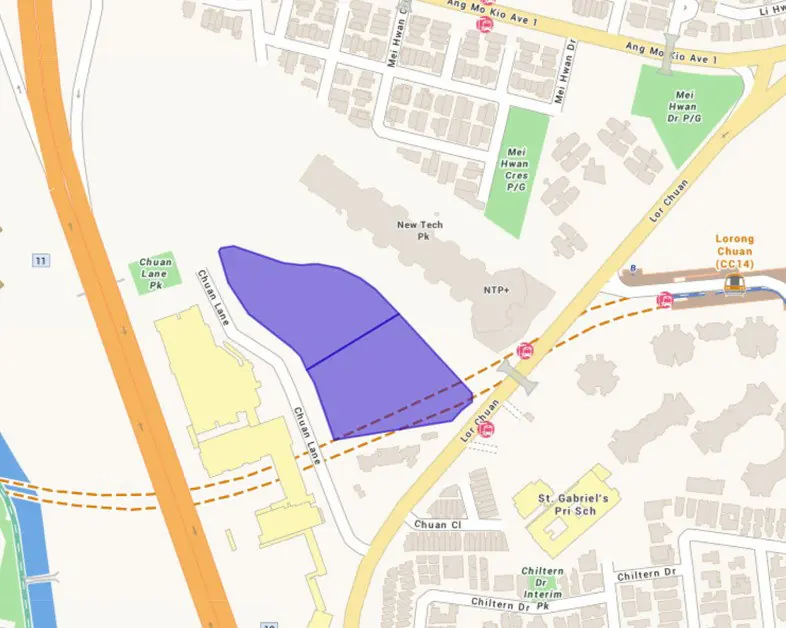
Register your interest to receive the floor plans and price list when the developer releases them.
This guide is general information, not financial, legal or tax advice. Rules and rates change; check them with the source shown, your bank or your lawyer before you commit.